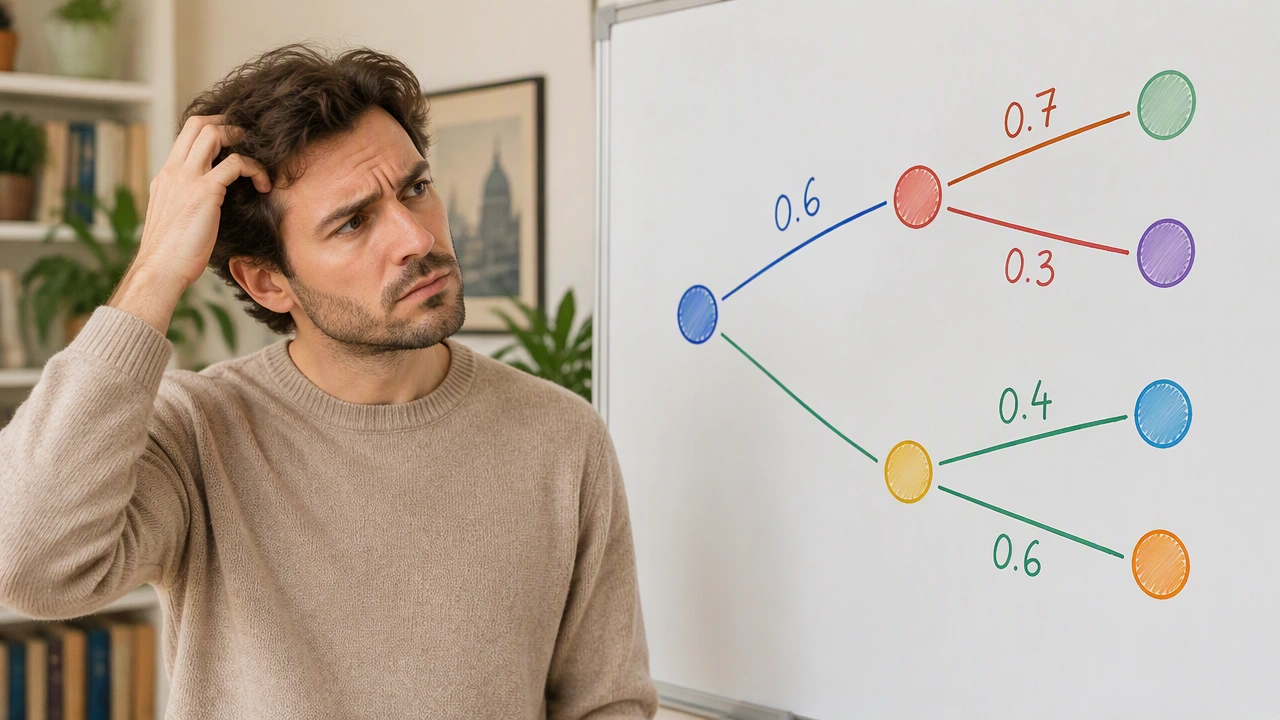
Human intuition about probability is notoriously unreliable. From the Monty Hall problem to the Gambler’s Fallacy, people consistently make errors when reasoning about chance. In this thread, let us explore the psychological and cognitive factors behind these misunderstandings. Confirmation bias leads us to remember hits and forget misses. The availability heuristic makes us overweight vivid, recent events. Base rate neglect causes us to ignore prior probabilities entirely. We can also discuss how conditional probability is particularly counterintuitive — even trained scientists sometimes confuse P(A|B) with P(B|A). Share your favorite examples of probability misconceptions, whether from textbooks, everyday conversations, or your own experience. Understanding why we get probability wrong is the first step toward building better mathematical intuition and making more rational decisions in an uncertain world.