
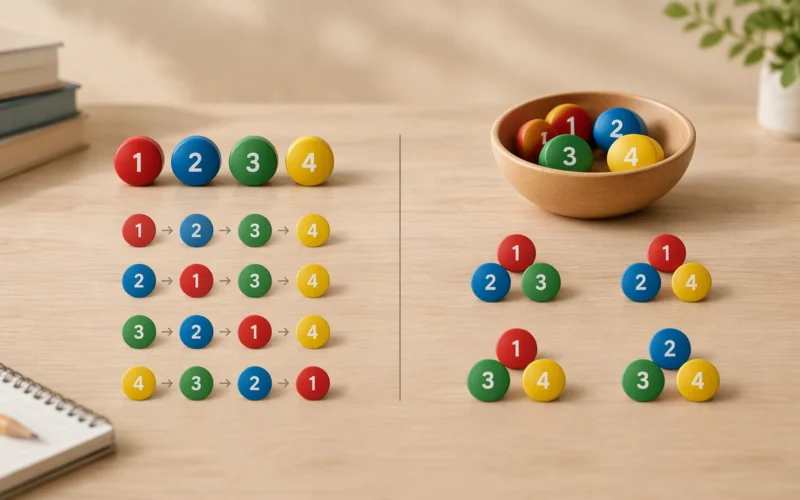
Permutations vs Combinations: Why Order Changes Everything in Probability
Learn the difference between permutations and combinations with clear examples. Understand how order-dependent and order-independent counting shape probability.
Learn the difference between permutations and combinations with clear examples. Understand how order-dependent and order-independent counting shape probability.

Break down the binomial distribution, its formula, assumptions, mean, variance, and examples for repeated success/failure trials.
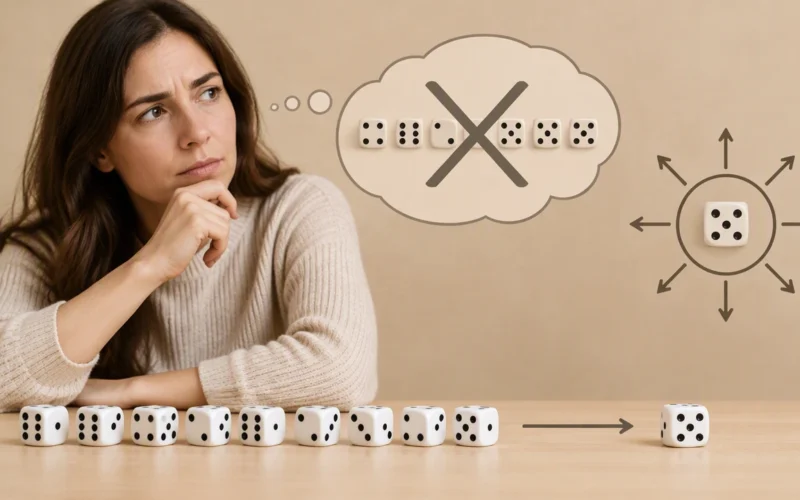
See why past random events do not affect future outcomes, how independent trials work, and where probability really comes from.
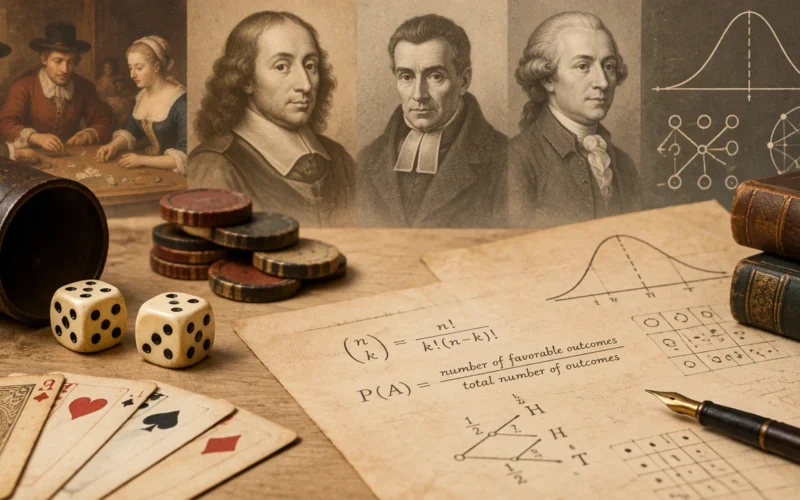
The origins of probability theory lie in gambling questions, yet centuries of work turned them into a rigorous mathematics of uncertainty.

The law of large numbers explains why average results stabilize over many trials, even when single outcomes vary wildly.

Monte Carlo methods use repeated random sampling to estimate complex quantities that are hard to compute directly.

Explore common probability misconceptions, from the gambler's fallacy to base-rate neglect, with clear examples and better reasoning habits.
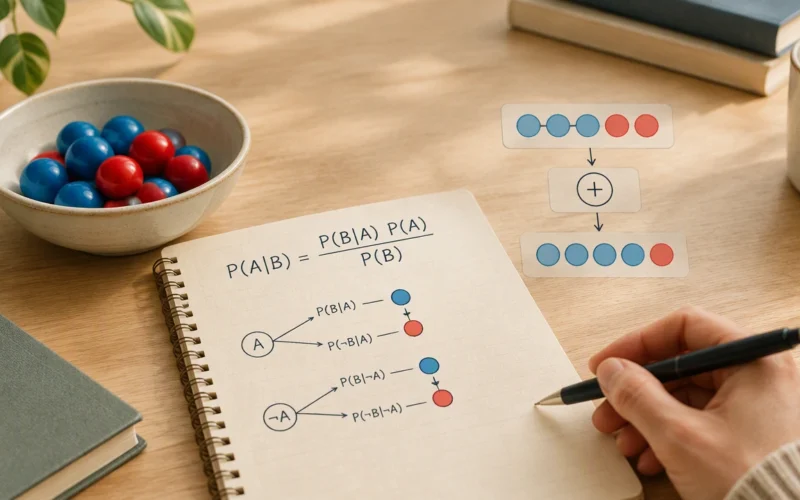
Learn how to use Bayes' theorem to update probabilities as evidence arrives, with clear steps, a worked example, and practical cautions.
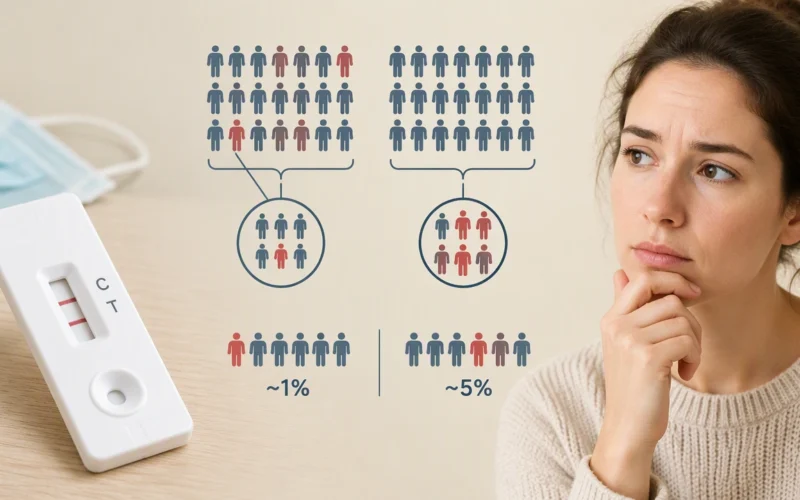
A positive result can still mean a condition is unlikely. Base rates and conditional probability explain why false positives matter.

Learn how to calculate and interpret expected value to compare uncertain outcomes, weigh tradeoffs, and make clearer everyday decisions.